
"coffee planting belt"
2000 article(s) found

Guatemala low-caffeine coffee beans recommended _ Vivetnam fruit decaf coffee how to make good?
Professional coffee knowledge exchange more coffee bean information please follow the coffee workshop (Wechat official account cafe_style) Guatemalan coffee grows on high-altitude cloud belts. Climatic conditions such as a large temperature difference in the morning and evening make the coffee not grow too fast (because the coffee grows too fast will make the coffee softer and lighter flavor), coupled with fertile volcanic soil, Guatemala horse

The main producing areas and characteristics of Coffee in the World
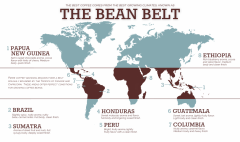
Coffee production zones (commonly known as coffee belts) range from 25 degrees north latitude to 30 degrees south latitude, covering many countries in Central, West Africa, the Middle East and South Asia, the Pacific, Latin America and the Caribbean. The reason why coffee cultivation is concentrated in this area is mainly due to the limitation of temperature. Because coffee trees are vulnerable to frost, neither north nor south latitude is suitable, especially in the tropics.

Coffee planting method-hanging ear coffee brewing method
Coffee planting method-hanging ear coffee brewing method climate factor is a prerequisite for coffee planting and growth. Coffee trees are only suitable for growing in tropical and subtropical areas between 25 degrees north and south latitudes, which are often referred to as coffee planting belts or coffee production areas. however, not all the land located in this area can produce excellent coffee trees. It is most suitable for coffee planting.

Guatemala Vivette Nan Fruit Coffee recommended _ Vivette Nan Fruit Coffee Flavor
Professional Coffee knowledge Exchange more information on coffee beans Please follow the coffee workshop (Wechat official account cafe_style) Coffee in Guatemala grows on high-altitude cloud belts. The climate conditions such as big temperature differences in the morning and evening make the coffee not grow too fast. Vivette Nango Highland is a place name with great temperament in Chinese translation. it is located in the northwest of Guatemala and has fertile soil.

About Coffee History Origin Culture and Spread
Coffee tree, is a tropical plant, evergreen shrubs, growing in the equator, north and south latitude 25 degrees each, that is, within the Tropic of Cancer region. The tropical tropics and the equator are the world coffee growing belt. The growing conditions require abundant rainfall and humid climate. The suitable altitude is about 600~1500 meters. The annual rainfall is 1500~2000 mm. Mild days alternate with cool nights.
Planting conditions of Coffee trees
The origin of the coffee tree is Ethiopia in Africa. In botany, coffee trees belong to the evergreen trees of the subgenus Rubiaceae, and coffee beans, commonly known as coffee beans, are actually the seeds of the fruit of coffee trees. They are called coffee beans only because they are shaped like beans. Climate is the decisive factor for coffee cultivation. Coffee trees are only suitable for growing in the tropics or subtropics, so latitude 25 degrees south and north.

The bitter Coffee Flavor of Nicaraguan Heavenly Manor Coffee Flavor and Taste production area
Nicaragua is located in central Central America, bordered by the Pacific Ocean to the west and the Caribbean Sea to the east. The highlands in the north and the coastal plains in the east are part of the Central American volcanic belt. The eastern plain is high-temperature and rainy, with a tropical maritime climate. The suitable climate provides an excellent growth environment for the cultivation of coffee. High-quality Nicaraguan coffee, grown in the north and middle of the country. Coffee is Ni.
Growth and characteristics of Coffee trees
The origin of the coffee tree is Ethiopia in Africa. In botany, coffee trees belong to the evergreen trees of the subgenus Rubiaceae, and coffee beans, commonly known as coffee beans, are actually the seeds of the fruit of coffee trees. They are called coffee beans only because they are shaped like beans.

Introduction to the characteristics of robusta coffee beans the advantages and disadvantages of robusta and Arabica beans
Professional coffee knowledge exchange more coffee bean information please follow the coffee workshop (Wechat official account cafe_style) currently there are three kinds of coffee beans in the world: 1. Arabica (Arabica): accounts for about 90% of the world coffee market, its aroma is changeable, it is not easy to grow, and it is mostly used in high-quality products.

Introduction of Los Congo Manor Coffee Flavor producing area like the faint taste in wine
Managua, the capital of Nicaragua, is located in the west of the border, on the south bank of Lake Managua, hence its name. The northwest is 140 kilometers away from the Collinto seaport on the Pacific coast. 55 meters above sea level. It is a Spanish city with beautiful scenery. Because it is located to the east of the Pacific volcanic active seismic belt, there have been four strong earthquakes in the city in the past 100 years, including one in December 1972.

What is the impact of the growing conditions and types of coffee? where is the coffee growing area?
Professional coffee knowledge exchange more coffee bean information Please follow Coffee Workshop (Wechat official account cafe_style) Coffee growing areas in the world there are three main coffee growing areas in the world, with different flavors due to their topography, climate, planting methods and processing techniques. Starbucks coffee buyers shuttle between the Tropic of Cancer coffee planting belts and buy the best coffee from all over the country.

The difference between Arabica and robusta coffee beans the difference between Robusta and Arabica
Professional coffee knowledge exchange more coffee bean information please follow the coffee workshop (Wechat official account cafe_style) front street-two major coffee varieties introduction coffee belongs to the Rubiaceae coffee evergreen shrubs, mainly planted in the tropical and subtropical areas between the Tropic of Cancer (latitude 2326), this area is also known as coffee belt (Coffee Belt) or coffee area (Coffee Z)

Planting patterns in the field of caffeine producing areas in Costa Rica
Following Cafe (official Wechat account vdailycom) found that Costa Rica is located in the volcanic belt of the low latitudes of Central America, with an elevation of about 800 to 2000 meters above sea level in the central plateau and mountains. The climate here has two obvious dry and wet seasons. The harvest period is from November to March of the following year, which coincides with the dry season, and coffee with high quality and consistent maturity can be harvested.
The day of coffee extinction is approaching? Experts predict that global coffee production will disappear by half by 2050.
Professional baristas please follow the coffee workshop (Wechat official account cafe_style) Coffee is basically easy to get and taken for granted, regardless of taste. But will there be no more coffee one day? Can you imagine that even Starbucks doesn't have coffee to buy? This is not an apocalyptic prophecy, you and I, coffee will not disappear in our lifetime, no

Introduction to the types of coffee beans-- Nicaraguan coffee beans with high quality coffee planting Sal
Nicaraguan coffee of high quality is in the forefront of coffee beans in the world and enjoys a good reputation. Its particles are moderate in size, mild in taste and very aromatic and mellow. Nicaragua is located in central Central America, bordered by the Pacific Ocean to the west and the Caribbean Sea to the east. The highlands in the north and the coastal plains in the east are part of the Central American volcanic belt. The eastern plain is high-temperature and rainy, with a tropical maritime climate. Suitable
The editor introduces the growth habits of coffee.
Coffee trees like mild temperatures during the day and less than two hours of direct sunshine, so if there is a lack of afternoon showers or fog to report every day, local farmers have to plant many taller trees in the coffee garden for shade. At night, they want an environment of about ten degrees Celsius but not too low, because too warm will make the coffee berries grow

Taste of Bolivian coffee beans CaranaviKara Nano Irupana Illupana Coffee producing area
Professional coffee knowledge exchange more coffee bean information Please pay attention to Coffee Workshop (Wechat official account cafe_style) Irupana is a town in Karana province, Bolivia, with a variety of natural landscapes, rich animal and plant ecology, and has unlimited potential in eco-tourism. Tiberia is also a tropical rainforest belt and has become the Amazon region.

Characteristics of coffee bean varieties in three major coffee producing areas of Latin America
Professional coffee knowledge exchange more coffee bean information please follow the coffee workshop (Wechat official account cafe_style) appreciation of coffee trees from various coffee bean producing areas of the world is a genus of Rubiaceae in botany. Coffee trees are native to subtropical Africa and some islands in southern Asia. In the 16th and 17th centuries, through the merchants of Venice and maritime hegemony
Are there any boutique coffee beans in Hawaii? What is the quality of coffee beans in Kona?
The golden planting belt of coffee is located between the Tropic of Cancer and harsh hydrological conditions such as frost-free precipitation throughout the year. As the only archipelago week in the United States, Hawaii has an area of only 16700 square kilometers, a forest cover of 50%, an island climate, a year-round monsoon adjustment, and a temperature of about 26 °C-31 °.

Experts predict that half of the world's coffee producing areas will disappear by 2050. Will coffee be extinct?
No matter the taste is good or bad, coffee is basically easy to get and is taken for granted. But will there be no more coffee one day? Can you imagine that even Starbucks doesn't have coffee to buy? This is not a doomsday prophecy. Coffee will not be extinct in our lifetime, but according to the latest report of the Australian climate research organization The Climate Institute,